*This page contains affiliate links
This post is part of a series on writing graphic novels, though today’s topic will cover a writing process I use no matter what format I’m writing for, tailored to graphic novel writing specifically.
If you’re new here and want to learn about writing a graphic novel, read this post first.
Until I sat down to write this series, I hadn’t realized how many times I outline my stories. Last week I mentioned how resistant I was to planning out my books. I rewrote my first book five times from scratch in my determination to get it right without planning. After I failed the fifth time, I finally admitted something needed to change. I sat down to plot out my book.
And… I was not prepared for how hard it would be. I felt utterly overwhelmed and uninspired. I read books and blog posts about plotting. I attended writing conferences and watched youTube videos covering different plotting methods. But I still struggled.
Eventually, pieces started coming together, though not for that original story. (The Save the Cat and Story Grid methods helped me most.) But it was slow and I wasn’t always sure it was working once I started drafting.
With my first graphic novel, everything was so new and I wanted to be strategic because I knew that if I didn’t do it in the right order, I might have to rewrite the script. I did not want to rewrite-again.
So, I started breaking down the planning process into manageable outlines that didn’t completely suck the enjoyment out of writing for me.
The words “plotting” and “outlining” are often used interchangeably. I am using “outlining” because I am not going to talk about plotting methods, though I will refer to the plot in general terms like “beats”.
Jotting Down Ideas
You might not think of your messy drawer of ideas as outlining, but it can be. I write my ideas in lists, sentences, and paragraphs then use that to build my next outline.
Even though, it’s a planning session, it’s also a form of freewriting. I do my best to write all the ideas down, which keeps more ideas flowing. This makes the experience loose, creative, and fun. (If you missed it, I talked about freewriting in last week’s post.)
All my story ideas are organized in folders in a note-keeping app on my phone. That allows me to jot them down pretty much anytime and anywhere. I don’t need to be at the computer because they are thoughts that come and go over days or weeks.
Story Beats
My next outline is a little more structured. I start to organize the idea into story beats. I’ve done this on my phone for flexibility, and I’ve done it in Scrivener to have the plot at hand while I write the first draft. Mine usually looks like a list of story events.
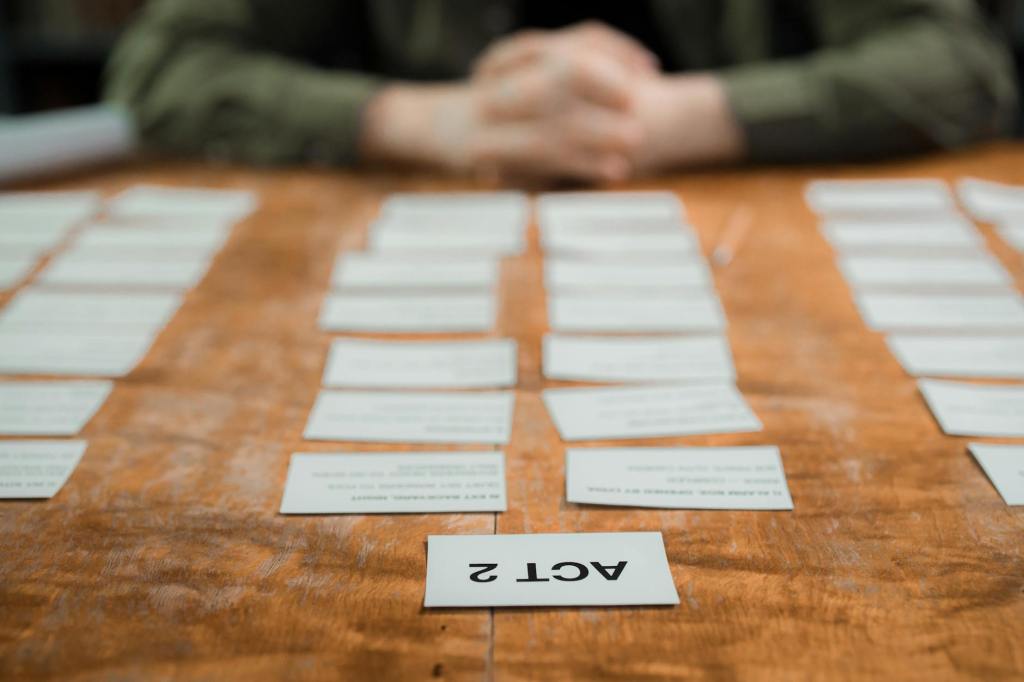
I know a lot of writers who do this outline on index cards so they can shuffle them around.
At this point, I start freewriting the first draft. I know where I’m starting and where I need to go. The stuff in the middle is flexible. I’ll come up with new ideas as I write. This outline mostly sets me up for a structurally sound first draft.
When I’m writing a graphic novel, my first draft is not a script. The formatting necessary for scriptwriting slows my creativity too much. I write the first draft the same way I would for a narrative novel.
Detailed Plotting
After the fast and furious first draft, I outline the plot of what I’ve just written. This lets me compare the before outline to the actual story outline. Then I can decide what needs to change. This is where I do a more formal plotting session. I think about theme and character development, and how the external plot is supporting those.
I almost always do this outline in Scrivener, using the digital flashcards.
Tracing Emotions by scene
This next outline can come before or after the second draft. When writing graphic novels, I’ll do it before starting the script.
I identify the key emotions scene by scene. I want there to be a rhythm of ups and downs and I want to see the character’s development reflected in the desires I’ve outlined.
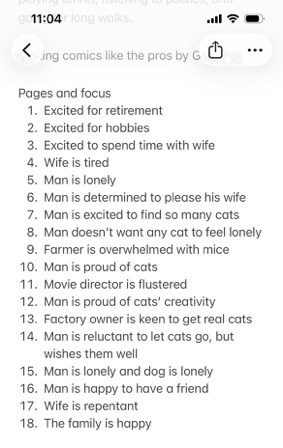
In graphic novels, each page should have a key emotion around which the page elements revolve. The page layout will support that emotion.
You can also clump the scenes together to find good chapter ends.
Storyboarding
This next outline is specifically for graphic novel writing. The emotions outline should list most of the pages of the book. So the storyboard builds out that outline into panels.
What visual actions support the emotional theme of the page?
This outline might involve sketching out potential panel sizes so I know how many panels I need. If I’ve written out a second draft, I’ll know some of the conversations that need to happen and can sketch in speech balloons in the storyboard to see if I need more pages for the scene. And I can see the pacing visually.
This is the hardest outline. It takes a lot of creative problem solving. Don’t rush it.
Then comes the script writing. If the storyboard is solid, the script will be fairly straightforward.
Summary Outline
When I’m satisfied with the developmental edits, I write the summary outline that my agent will use to pitch to editors. This outline is narrative. It’s paragraphs telling the story I just wrote. For traditional novels, this will be 1-2 pages long. For a graphic novel pitch, this outline is as many pages as it takes to cover all events of the story.
And that’s it. We’ve reached the end of the outlines I currently write while working on a project.
If you’re curious about writing a graphic novel and wonder if it might be something you’d be interested in, I recommend you read my first post: 5 Exciting Reasons You Should Write Graphic Novels For Kids.
Now go ahead, put it into practice. Let us know how it goes in the comments below or in my Substack community space.
Next week’s post will cover pages and panels. Learn how to use pages and panels to tell your story.
Want to read more original work? Check out my Medium account for flash fiction, personal essays, and articles.
Be sure to subscribe to my newsletter: WITH LOVE, FROM THE FUTURE for more personal letters and updates.
You can find my book recommendations in my Bookshop, Amerixicana Books.
And if you are looking for classic literature for class, or for your home collection, check out my publishing imprint, Simply Classic Books.
 D. Higbee
Leave a comment